
ARTIST SPOTLIGHT: 10LEC6
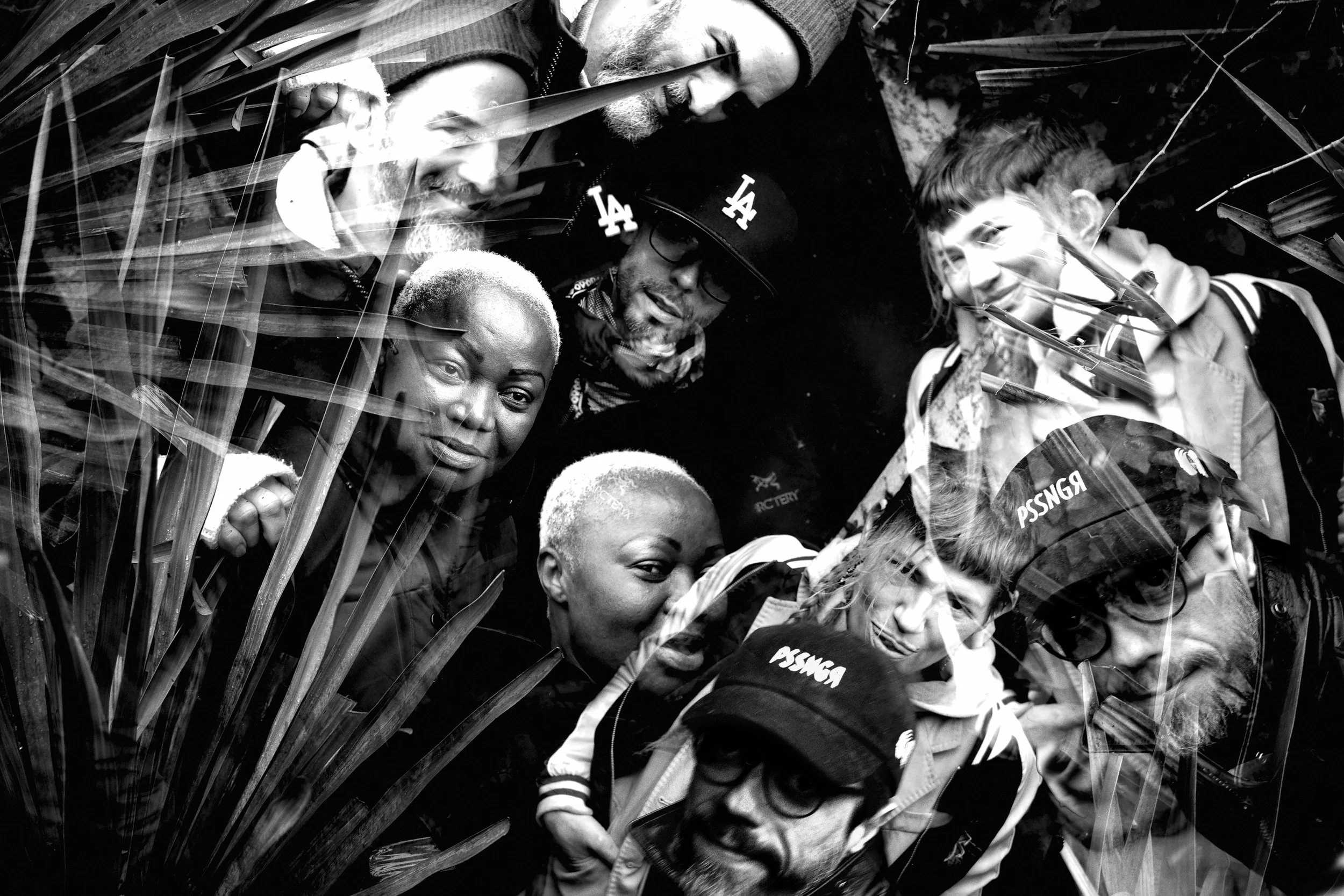
Paris collective 10LEC6 are back with Ako Akas, an adventurous new album inspired by a Cameroonian legend. Fusing Afro techno, footwork, UK bass, gospel and electronic sounds, the five piece continue to blur musical boundaries. We caught up with the band to chat about the album, Nicole's vocals, collaborations and their fearless creative journey.
1. First of all, congratulations on announcing Ako Akas. How are you all feeling now that the album is finally on the way?
Relief! It can finally be listened to and shared. We're super excited.
2. The album is named after a mountain in southern Cameroon that's linked to the legend of an endless dance. When did you first hear that story, and what made it feel like the perfect title for this record?
Nicole, our singer, told us the legend of Ako Akas — it intrigued us and felt like a metaphor for what the group was going through when we went back into the studio. In the middle of the Bone Bame tour, Nicole was under an OQTF (an order to leave French territory) and we couldn't honour the festival bookings we had outside of France. We wanted something symbolic, tied to our struggle and to Nicole's country of origin. How do you keep making music together under those conditions? You just have to believe in the music.
3. Nicole sings entirely in Bulu across the album. Was that always the plan, and what does singing in Bulu bring to the music that other languages wouldn't?
There's both Nicole's heritage and 10LEC6's own desire to convey emotions purely through sound. Bulu isn't necessarily understood by our listeners, and that's fine. The strength of 10LEC6 lies first and foremost in using the musicality of the language — its sonority and the ease with which you can play rhythmically with it.
4. You've described the album as both digital and organic. Was there a particular moment in the recording process when you realised you'd found that balance?
We set ourselves a starting point: begin each track with vocal melodies and a shaker rhythm. From there we built the tracks by playing them, then deconstructed them in FL Studio without thinking about how to perform them live. That allows for much greater freedom of experimentation. The organic/digital balance emerged instinctively.
5. You reworked a lot of the music in FL Studio after jamming together. How much of your sound comes from happy accidents compared to having a clear plan from the start?
Everything always starts from playing together in rehearsal, then we destructure, modify, filter, loop, and make brutal cuts — including in Nicole's lyrics, which she often has to adapt to preserve the meaning of what she's saying.
6. The new single Manetik sits at 160 BPM and pulls together Afro techno, footwork and UK bass. What made this the right track to introduce people to the album?
This track brings together quite different influences and comes with a ton of remixes. The album is meant to be an open project with a lot of collaboration, so it reflects the spirit of the album pretty well. Manetik, Si Yé Yé and N'sotching ensure continuity with previous albums, while other tracks like Assoussou, Bobenyang or O'bili Aya are more experimental and less club-oriented.
7. The Manetik remix package features Jana Rush, Simo Cell, Mshelula and Azzi On The Beat. Was there a remix that surprised you the most when you first heard it?
Honestly, all the remixers surprised us — we received so many different and exciting versions that it was impossible to choose, and some will even come out after the Ako Akas album. It also reflects our influences and the scenes we're connected to right now.
8. Your music brings together techno, gospel, Afro pop, footwork, punk funk and UK bass without feeling tied to one genre. Do you ever think about labels, or do you just make whatever feels right?
We never think about labels, which is why it's always difficult to fit us into categories or genres. We can also say that we're 5 members, each with very different influences, and that creates this sometimes unlikely mix.
9. 10LEC6 has been around in different forms over the years, with members involved in everything from Skins to touring with The Gossip. Looking back, what moments have shaped who the collective is today?
The gigs and the pleasure of playing together. But honestly, what keeps the group tight is clearly a shared vision — both artistic and political.
10. You've released music through labels including Ed Banger and now Grand Musique. How has your approach changed since Bone Bame?
We don't feel like the approach has really changed, but the creative process and the tools we used this time have shaped our sound differently. We worked for the first time with wizard Julien Delfaud.
11. The album also features Superpitcher on the track Binga. How did that collaboration come about, and what did he bring to the song?
We've been friends for a long time. We sent him a rough track with an almost mystical atmosphere, which he transformed into a cool journey. We felt it was good to have a less broken-up track on the album.
12. A lot of the record feels built around movement and rhythm. Do you picture people on a dancefloor while you're making music, or does that come later?
All our music is more or less conceived for live performance, and its dancefloor quality is tied to our culture, which is also rooted in dance music. When we produce tracks, we don't really think about the audience we might reach. 10LEC6 is made up of a rhythm section and a voice. Nicole brings the melodies — that said, on this album we made heavy use of electronic keyboards, and from a melodic standpoint it's certainly the most developed record we've made so far.
13. Paris is where you're based, but your music is deeply connected to Cameroonian culture and the wider African diaspora. How do those different influences come together naturally in your work?
We all maintain a strong connection to Africa, the African diaspora, and all the cultures that carry Africa's legacy. The group's drummer runs the label PSSNGR, whose approach is to document and circulate dance music avant-gardes, particularly those emerging from these cultures.
14. If someone had never heard 10LEC6 before, which track from Ako Akas would you tell them to start with, and why?
If you want to be surprised: listen to Bobenyang, Assoussou, O'bili Aya or Mayonne.
If you want to reconnect with previous albums: Si Yé Yé, Nsotching, Manetik.
If you appreciate the more experimental side: Teleya, Nyazu or Binga.
15. With the album arriving on 9 October, what are you most excited for people to experience once they can hear the whole project from start to finish?
I think the album should be seen as a narrative. It tells a story about society, transversality and the world today. The traditional sits alongside dystopia. The urban sits alongside the primeval forest. The individual sits alongside the collective. Minimalism sits alongside the hyper. It's an album about the world we live in today — open, unsettling but also exciting, as it tries to erase borders. The album isn't the end of the project, which will continue with more remixes and above all a live show.