Artist Spotlight: Nordi
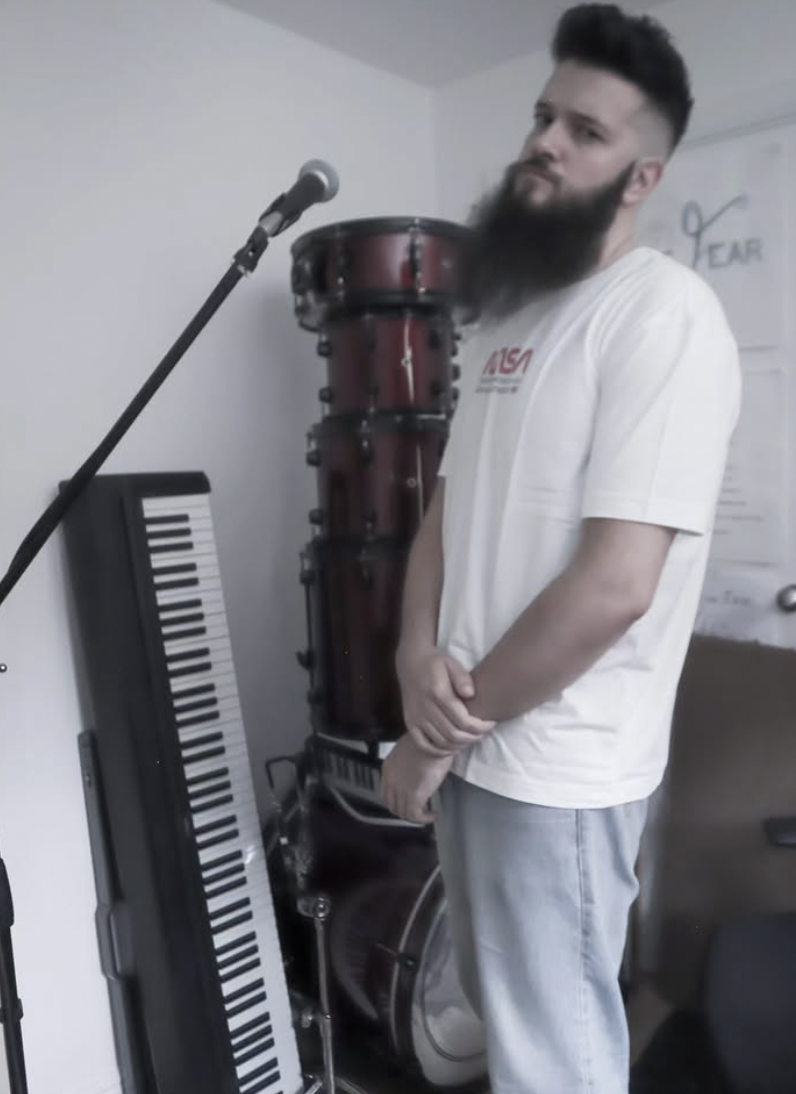
NORDI, raised between Mafra, Ericeira and London, blends metal roots, hip hop culture and self produced experimentation into a cinematic sound. A drummer turned architect of his own universe, he builds music like worlds. From Cryonic to the Atlas series and Tales, he invites listeners to become the glitch today.
1. You grew up in Mafra and Ericeira in Portugal before moving to the UK. How did those early environments shape the way you hear and make music today?
I recently discussed this with the Collective. Actually, I believe that growing up by the coast and having a clear sight of the horizon beyond the Atlantic Ocean, opens up your spectrum of possibilities compared to someone who does not often come across a clear sunset. I never identified myself with the more popular Portuguese music; nevertheless, I am very fortunate with my upbringing, really, and because the Portuguese culture is substantially more slow-paced, we can take our time to dissect certain aspects of life. In this sense, I am fortunate to have a close circle of friends who always love to discuss different perspectives of art, and this played a huge part in how I look at music in general.
2. Before producing, you were originally a drummer in the Portuguese metal scene. Do you think that background still influences the rhythm and energy in your production?
The energy, most definitely. Even though I had music classes at school, the drums always called me in because of the impact they have on music. Metal music arrived relatively close to when I decided to daily practice my drum skills, a genre that has always spoken to me due to its revolt against dogmatic concepts and personal struggles. It helped channel my frustrations therapeutically, especially when my parents got divorced. So yes, the angst lies within – my natural bounce and swing; however, it tends to live near a slower and more spacious pace, somewhere where I can actually articulate my thoughts and feelings.
3. Your creative roots also come from graffiti, breakdancing and beatboxing. How did those street culture experiences shape the artist you’ve become?
Funny enough, Mafra and Ericeira are not really urban environments, but my older brother’s friends in the neighbourhood ended up exposing me to these aspects of expression, street culture and to the overall Hip-Hop scene of Lisbon, like Da Weasel, Sam the Kid, Valete, Boss AC and Allen Halloween at the time. That, along with gaining access to the internet before my adolescence, opened a massive cultural door, mostly English-led. I would spend my nights drafting graffiti while on YouTube digging different music, while playing basketball, popping and beatboxing for friends between classes – time flies. Today, all these roots are evidenced in my soul, intertwined, even though I no longer dance, I do beatbox, and it is often my tool of choice to translate ideas into instrumentals/beats.
4. Your first major introduction to listeners was the “Cryonic” mixtape. Looking back now, what did that project represent for you at the time?
“Cryonic” represented a sort of capsule for some of the feelings and thoughts I had when I started writing verses and poems in English, around 2016. Since it's around the same time I moved to the UK, experienced university life, and the ending of a relationship, all of these resulted in this emotional pool of personal thoughts that drifted to lust and to my eagerness for achievement. Due to moving from one country to another, my social circle reduced dramatically, so I started putting into practice the jack of all trades mentality, by pushing my production skills, but resulting in a very raw and untreated sound and lyrical narrative. Even though there are tracks that work, such as “Wait”, “Smooth” and “Warning”: “Cryonic” was the raw blueprint. While my songwriting has evolved significantly since then, I respect it as the foundational sketch. As Outkast once said, “We missed a lot of church, so the music is our confessional”.
5. In 2020 you released the EP “Cuttin’ my Blessing.” How did that project change your approach to making music?
After realising that I could say anything in my music, and how this naivety was portrayed in “Cryonic” (and not working out as I thought it would), I realised that nobody really cares about how you feel in music, but how well you portray that feeling. “Cuttin’ my Blessing” is my Metal energy taking over after the denial following “Cryonic”, where I play with the subconscious of the listener by using double-meaning bars, melodic variations and catchy vibes, all while storytelling this trip that did not go as planned, the ups and downs while diverging more towards a serious narrative. I paid more attention to my vocals and how they merge with the instrumentals, while caring about the overall message.
6. You handle production, mixing and mastering yourself as an autodidact artist. What made you decide to learn and control the entire creative process?
I have always been a very methodical person, and have been working on the dreams that my younger self established when I was around 5 years old, believe it or not. My inner circle of friends and exchange of thoughts through discussions have always been the constant reason for my critical thinking in relation to how the music business operates. That, alongside my architecture career and mirroring the conceptual development of a project has allowed me to understand the overarching dynamics of the process. It is hard to keep changing hats, though, especially from going wild for hyped tracks to technical sharpness mode, but this gives me the freedom my art really needs. It’s definitely the long path, but I trust it will pay off in the end.
7. Your current era is the Atlas series, which is already 11 chapters deep with the release of “Tales.” Did you always imagine Atlas becoming such a long-form concept?
Not at all. This started the year after “Cuttin’ My Blessing” came out and it goes against my initial strategy of releasing a mixtape every year. However, I came across Russ's strategy and advice to upcoming artists to not release LPs, and it just made sense. However, I cannot lie, it is hard work, especially when I have this strong inclination, perhaps due to my architectural education, to make sure that my artwork relates to what I am talking about in the music. Due to my work ethic, I have a lot of material now that has not been released because I literally gatekept myself. How contradictory is that? I am working with the Collective’s help to come up with a strategy that balances the best of both worlds with my upcoming EPs – “Dopamine” and “Conspiracy”.
8. The idea for “Tales” actually started during your 2018 commute to Oxford Circus. What was going through the listener's mind during those journeys that sparked the track?
I remember those days when I was hustling, working in the high street selling perfumes (where the twins scene happened, listen to “NASA”), trying to get into the architectural industry, whilst developing my writing skills during my commute, getting into the habit of putting my thoughts into a song-ready format. The fast pace of London’s tube, especially during rush hours was the main drive, subconsciously making me vent against the monotony of the day-to-day work life of most people, where I could see through most people’s faces. Their frustrations, and I remember writing the lyrics as if I was speaking to them. At the same time, I had these moments of intense excitement whenever I landed very good verses and how I controlled this inner flame. How I somehow managed to keep it lit.
9. The song has a distinctive carnival-like synth melody and chaotic atmosphere. What kind of sonic world were you trying to build with this production?
I was literally trying to apply layers of irony and energy that would represent the different vibrations that normally happen within the tube, as a sort of critique of the monotony. That’s why you can hear pizzicatos in the guitar, parts played in the melodica; essentially, I wanted “Tales” to be part of that environment and just fit in. The drums, recorded drums and the sub drive the whole train as usual in my productions.
10. The hook includes the sharp crack of a baseball bat, which is a really unusual musical element. What inspired that sound choice?
I know, right? It’s all about the details. This relates to the part where I mention – the kick of the pitch – referring to the baseball pitch, that then just hits! And I warn the listener to run, perhaps they are late for work, or simply to catch that flying ball. At the same time, I want the listener to feel that sudden dizziness from the repetition, whilst not quite understanding where these sounds belong. I build complex worlds that demand attention; if you are moving too fast, you’ll miss the details. As I say in the track: You’ll say that you feel the same way, same delay? Another day.
11. The phrase “Shaped world? Be a glitch.” feels like a core message of the track. What does that line mean to you personally?
Precisely! It defines who Nordi is, a glitch in the algorithm. I mean, come on, who is creating this parallax scrolling in their tracks? It’s a call to the listener to be the glitch in the matrix. It’s timeless, and I sense it will age as fine wine; it just makes too much sense right now. The audience will catch up with it, and when they do, I hope it sparks that nerve so they stay true to what they are in a world that wants you to be a copy. I am here to inspire people, as I know exactly how difficult it can be out there.
12. “Tales” touches on themes like urban isolation, repetition and digital manipulation. Do you think modern technology is changing how we communicate with each other?
Let me get started on that, of course, I do. I can only imagine how it must be in a place like New York. We are not meant to be this conditioned, away from the natural landscapes. We know how technology can keep us connected with loved ones, but we should also know that it is using the same strategies as slot machines to keep us addicted. We are connected digitally, but disconnected physically. You know when it is so crowded in the tube, and you just do not know who to face? Everyone has their headsets, trying to avoid interaction because they feel exhausted and/or are simply not up for unexpected mood swings. To me, it’s just a strange way to be, but it became a normal scenario – worth of a painting, really.
13. Your influences range widely—from Joji and Isaiah Rashad to Daft Punk, The Weeknd, and System of a Down. How do you bring such different influences together into one sound?
On a macro level, these flows and vibes make all sense in my head (or playlist). In the end, they just click with my taste, and they easily merge lyrically. On a micro level, it’s never planned; normally, they do not match sonically in a single song. The best example resides in an upcoming track called “PEGI 18” (from Dopamine), where I merge several genres, but it’s extremely demanding, yet not very intuitive. Instead, in my work in progress, I just respect separate parts in the same song, or reserve certain parts within the same LP for these interruptions or sort of skits. Whenever I create a song, it is a blank canvas, and I know what BPMs my flow just flows with. However, there are days that to satisfy a certain frustration, I just need to resort to gritty riffs, or, as in my upcoming single “Don’t Let it Gone”, I have to sing alongside piano chords so my emotional message just communicates more efficiently. I follow the emotion, allowing it to dictate.
14. You’re also the co-founder and ideologist of the Monkery Collective. What role does the collective play in your creative vision?
Monkery is a collective that looks at music or art as a byproduct of being alive. Art, being the currency attached to our beings can help us channel and live the life we want, detached from things that do not resonate with us. We peer-review our tracks, we criticise our perspectives when they are inaccurate, and, most importantly, in the daily dialogue about AI, we respect human error, as this is what makes us unique. This year, we are releasing our compilation aVANT gARDE, celebrating 10 years. Monkery do not pressure in terms of time, because every single one has their own rhythm, but preaches organisation, and it serves as the framework for the roster to take root and just reach the skies.
15. Finally, if someone hears “Tales” while riding the Tube through Oxford Circus today, what do you hope they take away from the experience?
As mentioned previously, I hope it hits the nerve that makes the listener change their career to a job they love, instead of having to love the job. Or, it helps someone to find their oasis in life, or helps someone decide to flip it so they can get that private plane one day. I want “Tales” to be the spark that makes a listener reclaim their time. Whether that’s changing a career to find a job they actually love, or finding their own dream within the chaos. This is just one chapter. I have a massive archive ready to be unveiled.